Dr.AI Wins COMPUTEX Healthcare Award for Transforming Clinical Workflows with AI
July 23, 2025
Post Views : 503
The 2025 COMPUTEX “Best Choice Award – Digital Healthcare Category” has been awarded to Dr.AI, an AI-powered platform that supports…
BoE Launches AI Consortium to Shape Safer AI Use in Finance
July 16, 2025
Post Views : 503
The Bank of England (BoE), in collaboration with the Financial Conduct Authority (FCA), has officially introduced the AI Consortium—a structured…
OpenAI Launches HealthBench to Test AI in Real-World Healthcare
July 9, 2025
Post Views : 503
OpenAI has introduced HealthBench, an open-source dataset designed to evaluate how effectively AI models handle real-life medical queries. This move…
Can a Chatbot Really Support Your Mental Health? Experts Say It’s Closer Than You Think
July 1, 2025
Post Views : 502
As global demand for mental health support continues to soar, researchers in the US are working hard to bring credibility…
AI Can Write Code—But Should It Touch Your Finance App?
May 8, 2025
Post Views : 503
Artificial Intelligence has moved beyond buzzword status. Today, it’s actively assisting in writing code, testing features, and suggesting logic flows…
Techno Exponent Celebrated Its 14th Foundation Day
April 29, 2025
Post Views : 504
On April 14, 2025, Techno Exponent once again gathered its entire family under one roof at Novotel Kolkata to mark…
Transformative Impacts of AI Across Different Sectors
April 16, 2025
Post Views : 503
Introduction The advent of large language models in the 21st century and their implementation of AI has vastly reshaped several…
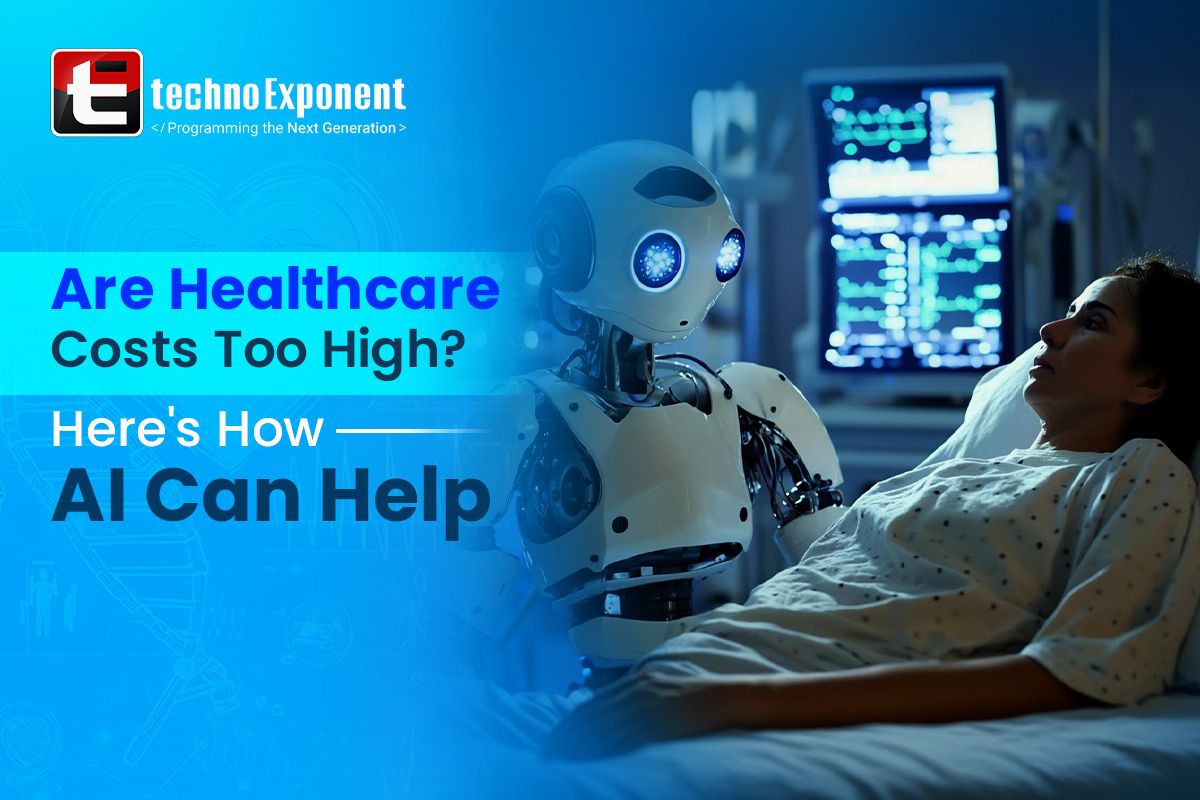
Are Healthcare Costs Too High? Here’s How AI Can Help
March 21, 2025
Post Views : 504
**Are Healthcare Costs Too High? How AI Can Help**
Rising healthcare costs are a growing concern, forcing many to delay treatment. AI offers a solution by reducing administrative expenses, improving diagnostics, and streamlining drug development. It enhances efficiency through predictive analysis, fraud detection, and telemedicine, making healthcare more accessible. However, ethical concerns like data security, algorithmic bias, and transparency remain. Proper implementation, informed consent, and bias reduction can ensure AI’s positive impact in healthcare.
AI In Edutech- How AI Helps In Revolutionizing The Current Edutech Industry
March 13, 2025
Post Views : 504
The blog highlights the contribution of AI in the field of education through personalized support, real-time assistance, streamlined assessment, and performance analysis. It also talks about the ethical concerns of AI intervention in the field of education.
What Vibe Coding Means For Businesses, Programmers, and the Rest of Us
February 26, 2025
Post Views : 505
Vibe coding is a new, almost effortless way of creating software—one where intuition, AI assistance, and sheer momentum take the place of traditional coding discipline.
You don’t need to comb through files, tweak lines of code, or troubleshoot methodically—you just say what you want, accept the AI’s suggestions without overthinking, and let the system work itself out. Debugging becomes a matter of pasting errors back into the AI, hoping it sorts them out.
The result?
Code that expands beyond immediate human comprehension but still mostly works, making it surprisingly useful for quick prototypes and weekend projects. But what does this mean for the future?
 (+44) 7893 942215
 (+1) 918 238 5761
 (+61) 468 288 314
 (+91) 9831584855 (Sales only)