
GPT-5
OpenAI
OpenAI's most capable model for complex reasoning, content generation, and agentic workflows. We use GPT-5 for enterprise applications where instruction-following precision and output quality are the priority.




Techno Exponent builds generative AI systems that produce original content, synthesize knowledge, and automate creative and analytical work at enterprise scale. From custom model development to GPT integrations and RAG solutions, we deliver production-ready generative AI that creates measurable business value.





Most organizations have access to the same foundation models. The ones pulling ahead are the ones who know how to put them to work.
Out-of-the-box generative AI is a starting point, not a solution. Generic models produce generic output. Without grounding in your data, alignment to your workflows, and integration into your systems, generative AI adds noise instead of value.
The business case for generative AI is clear: faster content production, accelerated knowledge retrieval, reduced manual effort across documentation, communication, and analysis, and new capabilities that were not economically viable before. But the outcomes depend entirely on how the technology is built and deployed.
Techno Exponent brings the architecture depth, model expertise, and enterprise delivery experience to make generative AI perform inside your actual business environment, not just in a controlled demo.
MoGeneric generative AI implementations fail for the same reasons: models are not grounded in proprietary data, outputs are not validated against business requirements, and systems are not built for the reliability and auditability enterprises require.
We build differently. Every engagement begins with a clear understanding of your data environment, your quality bar, and your operational constraints. The technical decisions follow from that, not from a preset template.
Custom model development and fine-tuning on your proprietary data for higher domain accuracy
End-to-end RAG pipeline design with precision-tuned retrieval, chunking, and reranking strategies
GPT-4, Claude, Gemini, and open-source LLM integrations with structured access controls
GAN development for synthetic data generation, image synthesis, and creative applications
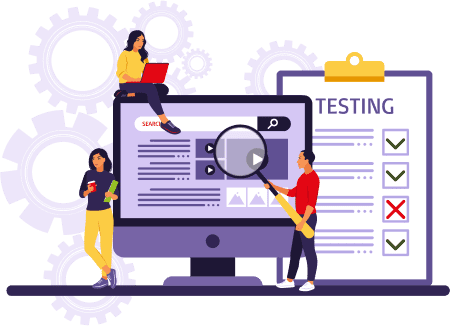
LLM testing frameworks that measure output quality, consistency, and regression across model versions
Full observability on every generation, retrieval call, and model decision
Security, data governance, and compliance are enforced at the architecture level

We build custom generative AI models trained on your proprietary data and calibrated to your specific output requirements. Whether the application is text, image, code, or structured data generation, every model is engineered to perform against your quality standards in production, not just in evaluation.

We integrate GPT-4 and other leading language models into your existing applications, workflows, and internal tools. Integration includes prompt architecture, access control, output validation, and system-level error handling so the model performs reliably within your operational environment from day one.

We assess your process landscape, identify where generative AI creates the highest return, and produce a phased deployment roadmap with clear technical specifications. We define what success looks like before development begins, so every decision is tied to a measurable outcome.

We design and deploy GAN architectures for synthetic data generation, image and media synthesis, data augmentation, and domain-specific creative applications. Our GAN implementations are engineered for output fidelity and stability, with evaluation frameworks to validate quality before production deployment.

We fine-tune foundation models on your proprietary datasets to improve domain accuracy, reduce hallucinations, and align outputs to your tone and requirements. Alongside fine-tuning, we establish systematic LLM testing frameworks that measure output quality, consistency, and model behavior under real-world conditions.

We replicate and adapt high-performing generative AI models for your specific domain, compressing time-to-production without compromising precision. This includes model benchmarking, domain adaptation, and systematic evaluation to verify that replicated models meet your performance requirements before deployment.

We build Retrieval-Augmented Generation pipelines that ground model outputs in your proprietary knowledge base. This includes document ingestion, chunking strategy, embedding model selection, vector store design, and reranking logic, all tuned to maximize retrieval precision and minimize hallucination in production.

We manage the full operational surface of your deployed generative AI systems, including model updates, prompt refinements, integration changes, performance monitoring, and rapid-response engineering support. Your systems stay accurate, reliable, and aligned to your business requirements as both the technology and your operations evolve.




We invest in the design phase before writing a line of code. Model selection, retrieval architecture, and evaluation frameworks are decided upfront because getting them right is what separates reliable production systems from expensive experiments.

From LLM fine-tuning and RAG pipeline design to GAN development and GPT integration, our team covers the complete technical surface of generative AI. You do not need multiple vendors to cover different parts of the stack.

Generic models produce generic outputs. We ground every system in your proprietary knowledge, workflows, and quality standards so the AI produces outputs that are accurate, on-brand, and operationally useful.

Every system is tested against edge cases, failure scenarios, and adversarial inputs before going live. Fallback handling, output validation, and human escalation paths are built into every deployment.

Data access boundaries, PII handling, audit logging, and regulatory compliance are designed into the architecture from day one, not added after the fact.

We define measurable success metrics at the start of every engagement and build toward those numbers, including output accuracy, processing time, cost per generation, and user adoption.
From focused consulting engagements to dedicated full-stack development teams, we structure our involvement around what your project actually requires.
We provide continuous monitoring, iterative optimization, and engineering support post-deployment to ensure your generative AI keeps pace with your evolving business and the rapidly changing model landscape.

We help startups embed generative AI into their core product from day one, giving small teams the content, automation, and intelligence capabilities to compete with organizations ten times their size.

We build HIPAA-compliant generative AI systems for clinical documentation, medical summarization, patient communication, and knowledge retrieval, reducing administrative burden on clinical staff while maintaining the accuracy and auditability the sector requires.

We deploy generative AI for document analysis, compliance report generation, customer communication, and internal knowledge retrieval, with the data governance, access controls, and audit trails that financial services regulations demand.

We build generative AI systems for product description generation, personalized customer communication, catalog enrichment, and support automation, giving retail teams the content production speed and personalization depth to serve larger catalogs and more customers without proportional headcount growth.

We build generative AI systems that synthesize operational data into clear summaries, automate exception reporting, and accelerate procurement and vendor communication, reducing the manual coordination load across complex supply chains.

We deploy generative AI for code generation, documentation automation, incident summarization, and internal knowledge base retrieval, so engineering and IT teams spend their time on high-value problems instead of routine documentation and communication.

We build generative AI solutions for technical documentation, maintenance report generation, knowledge capture from experienced staff, and automated communication across procurement and production workflows.

We build generative AI systems that create personalized learning content, automate curriculum documentation, and power intelligent tutoring experiences that adapt to individual student needs and knowledge gaps.

We develop generative AI solutions for content creation, campaign copy, audience-specific personalization, and creative asset generation, closing the gap between your content requirements and your team's production capacity.

We build generative AI systems that generate property descriptions, automate client communication, summarize transaction documents, and surface relevant knowledge from large property databases, helping firms move faster through larger pipelines.

We build generative AI systems for document drafting, policy summarization, public-facing communication, and internal knowledge retrieval, engineered to meet the auditability, data governance, and compliance standards of the public sector.

We deploy generative AI for customer communication automation, technical documentation generation, incident summarization, and internal knowledge retrieval, giving telecoms the content and communication speed their scale of operations demands.
As a generative AI development company, we build across the leading foundation models available today. Our team selects the right model for each use case based on your performance requirements, data environment, and cost targets.
OpenAI
OpenAI's most capable model for complex reasoning, content generation, and agentic workflows. We use GPT-5 for enterprise applications where instruction-following precision and output quality are the priority.
OpenAI
OpenAI's latest frontier model with enhanced reasoning and tool use. We deploy GPT-5.5 for high-stakes professional workflows that demand the highest available level of model performance.
OpenAI
A fast, multimodal model handling text, image, and audio in a single pass. We integrate GPT-4o for production applications that need strong capability at lower latency and cost than frontier models.
OpenAI
A lightweight, cost-efficient variant of GPT-4o. We use it for high-volume, latency-sensitive applications where speed and cost per call matter without sacrificing acceptable output quality.

Anthropic
Anthropic's flagship model is optimized for long-context reasoning and reliability on nuanced tasks. We deploy Claude Opus 4 for compliance-sensitive applications where output accuracy and auditability are non-negotiable.

Google's multimodal model has a one-million-token context window and native support for text, image, audio, and video. We use it for applications that require cross-modal reasoning across large datasets.

Meta
Meta's open-weight model is built for agentic and multimodal tasks. We deploy Llama 4 for organizations that need on-premise or private cloud deployment with full control over their data.

DeepSeek
A high-performance open-source model with strong reasoning capabilities. We use DeepSeek V4 Pro for cost-efficient, high-volume workloads where flexible deployment and low inference cost are priorities.

OpenAI
OpenAI's text-to-image model for high-fidelity visual generation. We integrate it for marketing asset automation, product visualization, and creative content pipelines that require accurate, instruction-following image output.

Stability AI
An open-weight image generation model that can be fine-tuned on your proprietary visual data and deployed within your own infrastructure. We use it where brand-specific consistency and private deployment are required.
OpenAI
OpenAI's speech-to-text model has strong multilingual transcription accuracy. We implement Whisper for call transcription, meeting documentation, and voice-driven workflows across multiple languages.


Project-Based Development
Dedicated AI Agent Team

Access our talent pool
Shortlist and select candidates
Kickstart


AI -ML Solution Provider of the Year 2024 by STARZ
We won Times Leading App Development Company of the year 2023.
Award by Times Group Times Leading IT Company Award by Times Group in 2022
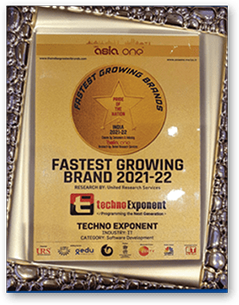
Most Influential Young Leader & Fastest Growing Brand 2021-22 Awards by Asia One Magazine
Leading Customer-Centric IT Company 2022 by Times Group




Traditional automation executes fixed rules against predictable inputs. Generative AI produces original outputs from language, data, and knowledge, handling tasks like drafting, summarizing, synthesizing, and responding that rule-based tools cannot perform. The two are complementary: automation handles structured repetition, and generative AI handles unstructured intelligence work.
We ground every system in your proprietary data and documentation through RAG pipelines, fine-tune models on your content where accuracy demands it, and establish systematic output evaluation before deployment. Post-launch monitoring ensures quality holds under real production conditions.
Yes. We build integrations to your internal databases, document repositories, CRMs, ERPs, and communication platforms so the AI works with your actual knowledge, not generic information. Every integration includes structured access controls and data governance.
Model updates are part of our ongoing support and maintenance service. We monitor provider changes, evaluate their impact on your system's behavior, and implement any necessary prompt, retrieval, or architecture adjustments to keep your system performing to its defined standard.
The timeline depends on complexity. Focused applications with existing clean data, such as a document summarization tool or an internal knowledge assistant, can go from scoping to production in six to ten weeks. More complex systems with multiple integrations, custom fine-tuning, and enterprise security requirements take longer. We provide a realistic timeline after the discovery phase, not before it.





Copyright © 2026, TECHNO EXPONENT, All Rights Reserved.
Techno Exponent is now T-WEB EXPONENT SERVICES PRIVATE LIMITED (Corporate Identification Number : U72300WB2016PTC210128)