Assess & Discover
- Evaluate your current data landscape
- Identify risks and gaps
- Identify opportunities for improvement




Techno Exponent helps organizations build a useful data ecosystem that transforms fragmented information into an asset for innovation and AI-driven decision-making. Our data governance service empowers your business to meet industry, national, and international standards of data management while also establishing a strong internal data governance framework.





Data is one of your organization's most valuable assets. But without proper governance, it can prove to be a liability. By implementing a strong and reliable data governance framework, your organization can benefit in the following ways:
For highly regulated industries such as healthcare, banking, financial services, insurance (BFSI), and pharmaceuticals, governance is a business necessity. A well-defined solution helps organizations manage data risk and maintain compliance.
Techno Exponent helps organizations like yours build enterprise-grade data governance solutions that guarantee data adheres to industry standards and is business-ready.
15+ Years of Industry ExperienceWith over 15 years of experience in enterprise data governance solutions, we have helped organizations across diverse industries build legally compliant and scalable data systems.
Senior Certified Data EngineersOur team of experienced and certified data engineers, architects, and governance specialists delivers best-in-class solutionsspecific to your business and regulatory requirements.
Deep Expertise We design and implement comprehensive governance solutions covering data quality, metadata management, data lineage, classification, access control, and governance policies.
Regulatory Compliance Expertise Our experts have extensive experience helping organizations comply with leading data privacy and security regulations, including GDPR, HIPAA, CCPA, CPRA, and India's DPDP Act, minimizing compliance risks.
24/7 Monitoring and SupportWe provide round-the-clock support monitoring to facilitate governance frameworks that remain audit-ready and optimized as your business and regulatory landscape evolve.

We will provide you with a complete data governance strategy and an accurate assessment of the current state of your data ecosystem. Our team will assess your organization’s current data maturity, identify governance gaps, and define clear frameworks for data ownership and accountability.

Our consulting services will help you design and implement a data governance solution that transforms data into a useful business asset. A successful data governance strategy begins with a clear understanding of your organization's data landscape, business objectives, and regulatory requirements which we will help you design and implement.

A data catalog gives your organization a centralized, searchable inventory of all its data assets, making it easier to access and govern enterprise data. Our team will help you build and maintain a comprehensive data catalog that provides complete visibility into your organization’s data assets.

Our data lineage service provides a holistic view into how data moves across your organization, from its source to its destination. We will capture metadata, transformations, and data flow events throughout the data lifecycle, enabling you to trace data origins, track its journey, and understand how it is being used.

We will categorize your enterprise data based on its sensitivity, business value, criticality, and risk level. Classification helps organizations protect sensitive information while also adhering to the overall data governance framework and regulatory laws.

We make certain that enterprise data is collected, stored, processed, accessed, retained, archived, and disposed of in accordance with legal, regulatory, and organizational policies so that your organization is always audit-ready.

Our experts establish role-based access controls that enable safe access to business-critical data while minimizing the risk of excessive or unauthorized permissions. Since businesses must comply with regulations like GDPR, CCPA, CPRA, DPDP, HIPAA, SOX, and PCI-DSS we help you do that by working on data protection and security measures for your organization.

Effective master data management eliminates inconsistencies in organizational data. It improves data quality, supports informed decision-making, and provides a trusted foundation for business operations, analytics, and AI-driven initiatives.

We will verify that your entire enterprise data ecosystem is accurate, complete, consistent, valid, relevant, and in accordance with data-quality standards. We help transform your enterprise data into a trustworthy asset that powers informed decision-making across your organization.

In regulated industries such as healthcare, pharma, finance, and technology, over-entitled data access can increase security and compliance risks. Our team audits data access entitlements to identify users with unnecessary permissions, helping you enforce the principle of least privilege and align your data access practices.

Our data governance team will enforce data quality standards across your organization’s data assets so that data is suitable for predictive analytics, Machine Learning, and Artificial Intelligence use cases. Your data for AI/ML initiatives will stay audit-ready.





We help banks, financial institutions, and fintech companies establish secure, aligned, and trustworthy data governance frameworks. Our experts implement end-to-end data lineage for credit, risk, and fraud analytics, master data management for customers, accounts, and financial products, and governance controls that promote data quality and consistency. We also help organizations meet stringent regulatory requirements, including DORA, GDPR, and other compliance standards, enabling compliant operations and better risk management.

We assist healthcare companies, hospitals, and life sciences organizations in building safe, regulatory-compliant, and patient-centric frameworks. Our data governance services include data classification and role-based access controls across healthcare systems, enterprise data cataloging for clinical, operational, and claims data, and HIPAA-compliant audit trails and access governance. By ensuring data security, regulatory compliance, and information management, we enable informed clinical and operational decision-making.

We help insurance providers establish compliant frameworks for policyholder, claims, and broker data. Our services include master data management, jurisdiction-based access controls, data residency compliance, and centralized governance for legacy data modernization. By delivering well-governed data for underwriting, pricing, risk assessment, and claims processing, we enable insurers to improve operational efficiency, regulatory compliance, and data-driven decision-making.

Techno Exponent helps pharmaceutical companies build regulatory-compliant and enterprise-grade data governance frameworks across research, clinical, manufacturing, and commercial operations. Our services include data classification, metadata management, end-to-end data lineage, and role-based access controls. By working on industry regulations compliance, improving data quality, and maintaining traceable data throughout the product lifecycle, we guarantee regulatory readiness and informed business decisions.

Techno Exponent can assist retail and e-commerce businesses in establishing compliant data governance across online stores, marketplaces, mobile apps, loyalty programs, and customer touchpoints. Our services include master data management, customer data classification, consent governance, and role-based access controls. By guaranteeing compliance with regulations such as GDPR and CCPA while simultaneously improving data quality and consistency, we enable personalized customer experiences, accurate analytics, and AI-driven recommendations built on trusted data.

Architecture, engineering, and construction (AEC) firms can implement data governance across BIM models, design platforms, procurement systems, and project management tools. Our services include master data management, metadata management, data lineage, and governance controls that create a single source of truth for project and asset data. By enabling consistent and traceable information throughout the project lifecycle, we ensure better collaboration, regulatory compliance, cost control, and AI-powered project analytics.
Collibra
Alation
Informatica CDGC
Microsoft Purview
Atlan
OvalEdge
data.world
Databricks
Unity Catalog
AWS Glue
Data Catalog
Google Dataplex
OpenLineage
Marquez
DataHub
Amundsen
Apache Atlas
Manta
Informatica MDM
Reltio
Semarchy
Profisee
SAP Master Data Governance
Talend MDM
Great Expectations (GX Core)
Soda
Monte Carlo
Anomalo
Bigeye
Ataccama
Informatica Data Quality
dbt tests
Snowflake Horizon
masking & RBAC
row-level / column-level security
Immuta
Privacera
BigID
Satori
OneTrust
Collibra Protect
HashiCorp Vault
dbt
Fivetran
Airbyte
Informatica (IICS / PowerCenter)
Talend
Matillion
Azure Data Factory
AWS Glue
Apache Kafka
Apache NiFi


Project-based hiring
Dedicated hiring

Access our talent pool
Shortlist and select candidates
Kickstart


AI -ML Solution Provider of the Year 2024 by STARZ
We won Times Leading App Development Company of the year 2023.
Award by Times Group Times Leading IT Company Award by Times Group in 2022
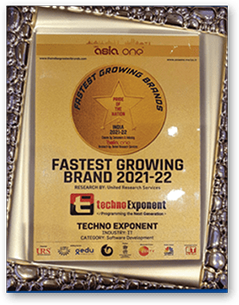
Most Influential Young Leader & Fastest Growing Brand 2021-22 Awards by Asia One Magazine
Leading Customer-Centric IT Company 2022 by Times Group




Data governance refers to a framework of policies, processes, standards, and responsibilities that ensure an organization's data is accurate, reliable, consistent, and aligned with international/national regulations. It specifies how data is collected, managed, accessed, and used. It does this by defining clear ownership, quality standards, and usage guidelines.
Data governance is important because it controls who gets to access data. Data needs to be available to the right applications and people, but it should also be safeguarded against misuse. Unauthorized access can get a company into trouble with international laws and regulations if there are data breaches.
The biggest benefits are that data quality is improved, which in turn supports organizational efficiency and a data-driven culture at work. But the most important takeaway is that the regulatory compliance problem that most niche organizations face is completely solved by having a data governance team working behind the scenes.
Some of the biggest data governance challenges include:
Many organizations also struggle to keep data secure while making it easily accessible to the right people. A strong data governance strategy helps overcome these challenges by improving data quality, accountability, and control.
A data governance framework is a set of policies, roles, standards, and processes that define how data is managed across an organization. It establishes clear ownership, improves data quality, supports compliance, and ensures the right people can access trusted data when they need it.
Let us know your requirements and fill out our contact form. A senior team member will reach out to you immediately.
It depends on the hiring model that you choose. You can choose between a project-based hiring or a dedicated hiring option. Project-based hiring works on a per project basis while a dedicated hiring means that you can hire your own team of experts from Techno Exponent at an hourly rate for as long as you require.
We can roll out governance frameworks in a matter of weeks. Depending on the scope of the work, we will aim to complete it within 3 - 4 weeks.
It is an ongoing process, and the framework needs to be upgraded from time to time to keep up with changes in regulations.
Master Data Management (MDM) is the process of creating and maintaining a single, consistent version of an organization's most important business data. Critical information such as customers, products, suppliers, employees, and locations are standardized and synchronized.
Absolutely. Modern data governance solutions integrate with your existing databases, data warehouses, cloud platforms, CRMs, ERPs, and business applications. Rather than replacing systems, governance adds policies, metadata management, security controls, and monitoring across the existing data ecosystem.
Data governance establishes standards for data collection, validation, ownership, and monitoring. It helps identify duplicate, incomplete, outdated, or inaccurate records while implementing quality rules that ensure business data remains trustworthy.





Copyright © 2026, TECHNO EXPONENT, All Rights Reserved.
Techno Exponent is now T-WEB EXPONENT SERVICES PRIVATE LIMITED (Corporate Identification Number : U72300WB2016PTC210128)